
Exit
The ultimate end game. We get the company ready, and you ready, for a clean separation. The business keeps running and you leave the way you decided to.
- 3.1
- The businessStill running, still standing, after you go.
- 3.2
- YouOut cleanly, and still on good terms.
What we usually hear from founders and business leaders
Three things we hear over and over, in different words each time. If two of them are true of your company, you are in the right place.
- 01
The ending is coming anyway
An approach, a birthday, a co-founder who wants out. It arrives whether or not anybody has decided what it looks like.
- 02
The company needs you
A business that cannot run without its founder is worth less than one that can, to anybody who takes it on.
- 03
Nobody has looked yet
The things a buyer will find in diligence are already there. Right now they are only unfound.
What working together looks like
One way End Game | Exit tends to run: four stages, the part of the company each one works on, and the experience each one calls on. Every company starts somewhere different, so yours may run shorter, longer, or in another order. What is worth reading here is the shape of the work, and you get to read it before you speak to anyone.
- AFocus / The intentThe intentWhere it is all meant to end up.
We separate what you want from what you will take
Price is the easy part to talk about and rarely the whole of it. What you actually want out of this usually includes time, reputation, and what happens to the people you hired. Better to know that before an offer arrives.
Draws on- Exit & boards
- Governance & transactions
- BFocus / The marketThe marketWhere you compete, and who else is trying.
We look at the company the way a buyer will
Customer concentration, key person risk, the contracts nobody has read since signing. None of it improves by being found later, and all of it is cheaper to fix while you still have time.
Draws on- Governance & transactions
- Growth & scale
- CFocus / The peopleThe peopleWho runs it when you are not in the room.
We make the company work without you
This is usually the longest stage and the one that moves the outcome most. A company that runs without its founder is a different asset from one that does not.
Draws on- Growth & scale
- Technology & transformation
- DFocus / The operationThe operationEverything that has to work on a Tuesday.
We get you ready, not just the company
Founders who have not thought about the day after tend to make poor decisions in the last week of a deal. Getting you ready is part of the work, not an afterthought once the company is.
Draws on- Exit & boards
- Connections & partnerships
The aim is to finish with a company that stands up to being looked at, and a founder who knows what they are walking towards. Those two things are what separate a clean exit from a painful one.
Who you’ll be in the room with
These are the people behind End Game. Which of them you work with is decided by what your company actually needs, and whoever it is has run their own company, so the advice comes from having done it rather than having read about it. No account manager, and no team somewhere behind them.
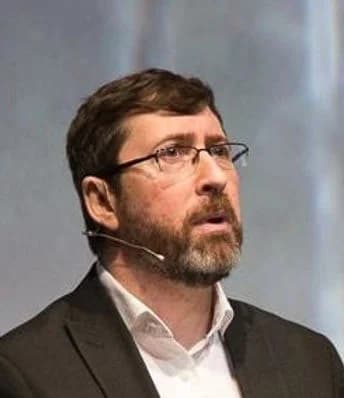
Vikas Shah MBE
Serial Entrepreneur. Growth, M&A, Transactions
Governance and transactions. Knows what an acquirer will look at, before they look at it.
James Akrigg
Technology Transformation
Technology strategy and transformation. Turns innovation talk into things that actually ship.
Nick Richardson
Growth Hacker & Scale-Up Strategist
Breaks growth plateaus. Works on the systems that let a company scale without the wheels coming off.
Naomi Timperley
Super Connector & Growth Mentor
Opens doors. Builds the partnerships and introductions that move a business further than another quarter of effort would.
Giles Harridge
Exit Specialist & Serial Entrepreneur
Prepares companies to be sold and boards to behave. Has sat on both sides of the table.




Common questions
The questions founders ask us before they commit to anything. Answered the way we would answer them in the room.
01How early is too early to start this?
Earlier is better and we have never thought a founder started too soon. The stages that move the outcome most are the ones that take real time, so starting when a sale is already on the table limits what can still be changed.
02Are you brokers?
No. We do not market your company and we do not go looking for buyers. Getting the company and the founder ready is the work, and it is charged as work. If you want us hands on in the sale itself, we agree that separately and tell you exactly what it is.
03We are not sure we want to sell.
That is fine, and most of this work is worth doing anyway. Everything that makes a company sellable also makes it a better company to own. Exit readiness and simply being well run are close to the same list.
04What if diligence turns up something bad?
Then you have found it, which is the good version of that sentence. Everything on that list exists whether or not anyone has looked. Finding it now means it is a thing you fix rather than a thing you get told about.
05Do you work with the board as well as the founder?
Yes, and usually we have to. An exit that the founder wants and the board has not been prepared for is one of the more common ways these come unstuck.
Related articles
Longer thinking on exit, written by the same people who run it.
- No. 06
What Is Exit Readiness? A Plain-English Definition and a Forty-Point Checklist
Exit readiness is not a document and it is not a state of mind. It is the condition of being able to withstand a stranger examining your business in forensic detail without the price moving. Here is what that takes.
11 September 2026 / 6 min - No. 03
Valuation Is a Story With Numbers Attached
Somebody at a conference told you businesses like yours go for six times. They were describing an output as though it were an input, and the difference is worth several million pounds.
4 September 2026 / 5 min
What is your end game?
Tell us where you want to land and we will tell you honestly whether End Game | Exit is the right way to get there. That conversation costs you nothing and we will say so if the answer is no.